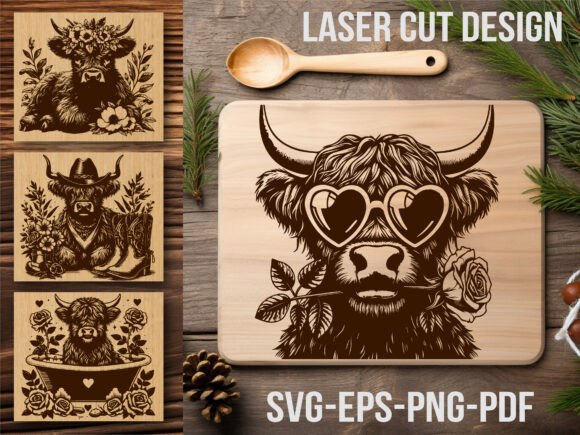
Floral Highland Cow Laser Cutting Board Review
When I first opened the file for the Floral Highland Cow Laser Cutting Board, my initial reaction wasn't about the technical specs, but about the mood it set. There is a distinct charm to this design that goes beyond simple graphics; it feels like a story waiting to be stitched into fabric. As someone who spends hours evaluating digital assets for real-world projects, I am always looking for that sweet spot where artistic personality meets practical application. This piece delivers exactly that.
The concept of pairing the rugged, shaggy silhouette of a Highland cow with delicate floral elements creates an immediate visual contrast that is hard to ignore. It strikes a balance between rustic and refined. For designers building a brand around handmade goods, this kind of thematic cohesion is gold. It suggests a product line that is grounded in nature yet polished enough for a boutique setting. Before we even talk about stitching techniques, you have to appreciate how well this theme translates to physical products. It screams "handmade," which is often the most valuable attribute in today's market.
From Digital File to Finished Product
I recently put this design to the test on a custom tote bag project intended for a local craft fair. The client wanted something unique for her summer market booth, specifically targeting parents and pet lovers. We selected a heavy-duty canvas tote, a fabric known for its texture, which can sometimes be tricky for detailed embroidery. The Floral Highland Cow Laser Cutting Board design handled the transition from screen to fabric beautifully.
The layout allowed for a generous amount of negative space around the cow's head, which is crucial when working with textured fabrics like canvas or linen. If the design were too dense, the stitches would get lost in the weave. Instead, the open composition let the thread colors pop while maintaining the integrity of the fabric's surface. When I ran the machine, the stitch density felt appropriate for the scale of the cow's features. The flowers surrounding the frame added a softness that prevented the image from feeling too heavy or aggressive.
What stood out most was how the design aged visually. Unlike some digital files that look crisp on a monitor but flatten out once embroidered, this one retained its character. The finished product had depth. Customers at the fair stopped to touch the bag, drawn in by the tactile quality of the embroidery. They didn't just see a picture; they saw craftsmanship. That is the power of choosing a design that respects the medium.
Where This Design Shines
This design is incredibly versatile, but it has specific niches where it truly excels. It fits perfectly into the world of custom apparel and home decor. Imagine this motif on a sweatshirt for a winter holiday gift; the cozy vibe of the cow paired with the warmth of knit fabric creates an instant emotional connection. Similarly, it works wonderfully as a baby item, such as a onesie or a nursery pillow cover. The floral accents soften the look, making it gender-neutral and timeless.
- Kitchen Towels and Aprons: The rustic theme aligns naturally with kitchen aesthetics. A large version of this design on a flour sack towel could become a signature piece for a small bakery or farm-to-table business.
- Patches and Badges: The clear outline makes it ideal for creating embroidered patches. These can be sold separately or applied to denim jackets, backpacks, and caps for a personalized touch.
- Commercial Merchandise: For Etsy sellers and small shop owners, this is a strong asset for creating branded merchandise. It offers high recognition value without being overly generic.
The versatility extends to holiday embroidery projects as well. Whether it is a Christmas ornament or a Valentine's Day accent, the floral elements allow the design to adapt to different seasons while keeping the central character recognizable.
Navigating Potential Pitfalls
However, no design is perfect for every situation, and honest evaluation requires acknowledging where caution is needed. While the Floral Highland Cow Laser Cutting Board is robust, there are scenarios where it might struggle. Small hoop sizes present a challenge here. If you attempt to shrink this design down too much for a child's hat or a tiny cap, you risk losing the intricate details of the flowers and the texture of the cow's fur.
Texture is another factor. On thin or stretchy fabrics, such as light cotton jersey or sheer materials, the weight of the embroidery can cause puckering if not stabilized correctly. You need a high-quality stabilizer to support the density of the fill stitches. Dark fabrics also require careful consideration. If the background fabric is black or navy, you must ensure your thread selection provides enough contrast. The lighter floral elements might get swallowed up if you don't choose bright, vibrant threads.
Furthermore, while the design is great for flat surfaces, curved surfaces like baseball caps require extra care. The curvature can distort the proportions of the cow's face if the digitization isn't adjusted for the curve. In these cases, testing on a scrap piece of the actual garment material is non-negotiable. Skipping this step could lead to a finished product that looks distorted rather than charming.
Practical Notes for the Professional Designer
Before you commit this design to a commercial production run, there are several technical checks you should perform. First, always test the design on scrap fabric. This allows you to gauge the stitch density and ensure the thread tension is correct for your specific machine. Different machines handle satin stitch and fill stitch differently, and a quick test can save you hours of rework.
Review the stitch count and file format compatibility. While the product description mentions it is laser-ready, if you are using it for embroidery, you need to confirm the specific file formats available (such as .dst, .pes, .exp). Ensure the design includes all necessary layers if you plan to use multiple colors or applique techniques. If you are planning to sell finished items, double-check the licensing terms. Some designs are for personal use only, while others allow for commercial sales of the final product. Clarity here prevents legal headaches later.
Consider the visual appeal of your mockups. Since this is a digital asset, creating printable mockups that show the design on various backgrounds will help you visualize the final result. Compare how the design looks on light versus dark fabrics in your software before ordering materials. This step ensures that your marketing images accurately represent what the customer will receive.
Final Thoughts on Value and Trust
In the end, the value of a design lies in its ability to elevate a product. The Floral Highland Cow Laser Cutting Board does more than just add a graphic to a shirt; it adds a sense of narrative and care. When customers buy a handmade item, they are buying into the story behind it. This design tells a story of nature, whimsy, and craftsmanship. By paying attention to the nuances of fabric choice, stabilization, and color theory, you can transform a simple digital file into a beloved finished product.
For those running a craft business or selling on platforms like Etsy, investing time in understanding how a design behaves in the real world is what separates a hobbyist from a professional. This design offers a solid foundation for creating memorable gifts, boutique branding, and commercial embroidery projects. Just remember to respect the limits of the medium, test thoroughly, and let the unique personality of the Highland cow shine through in every stitch.